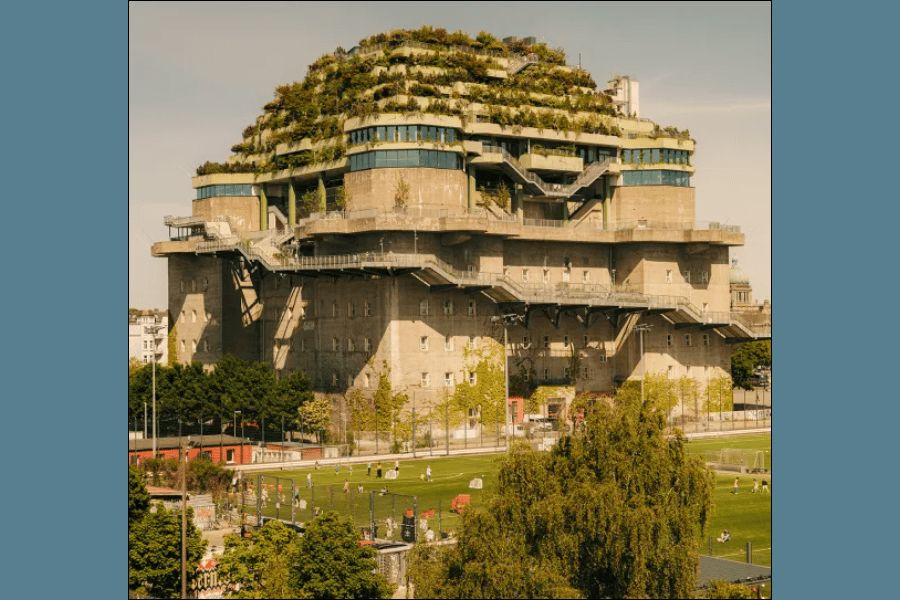
The Flakturm IV bunker building was too sturdy to destroy. The WWII era air raid shelter used thick concrete walls that made it impenetrable during the war, and indestructible afterward. For the past ten years, local architects in Hamburg have been working to build a staircase around it and make the symbol of war into something different. Last year, construction was completed and today it’s a public green space with a roof garden and its usage has been transformed.
The effort is perfectly explained by a mindset in Germany known by the term Vergangenheitsbewältigung, which describes the act of a group of people reflecting and coming to terms with their collective past:
“Today’s Germany has effectively and thoughtfully engaged in the education about and remembrance of the Holocaust. In terms of education, museums use geographic elements and an abundance of evidence to show beyond doubt the extent to which the events that took place are relevant. On the other hand, remembrance and memorialization seem to use more symbolic and subliminal tactics to convey the horror of Nazism through emotion rather than brute facts.”
Reading about this reimagined bunker and this beautiful idea that warrants an entire word in the German language, I found myself wishing there were more people encouraging (or perhaps inspiring) this sort of introspection in other cultures. Imagine if we had all spent some time in history classes reflecting on painful episodes from the past and discussing how we might ensure we never need to relive them.
Learning about the past shouldn’t be about memorizing dates. It should help us focus on lessons we should take away to create a better future.