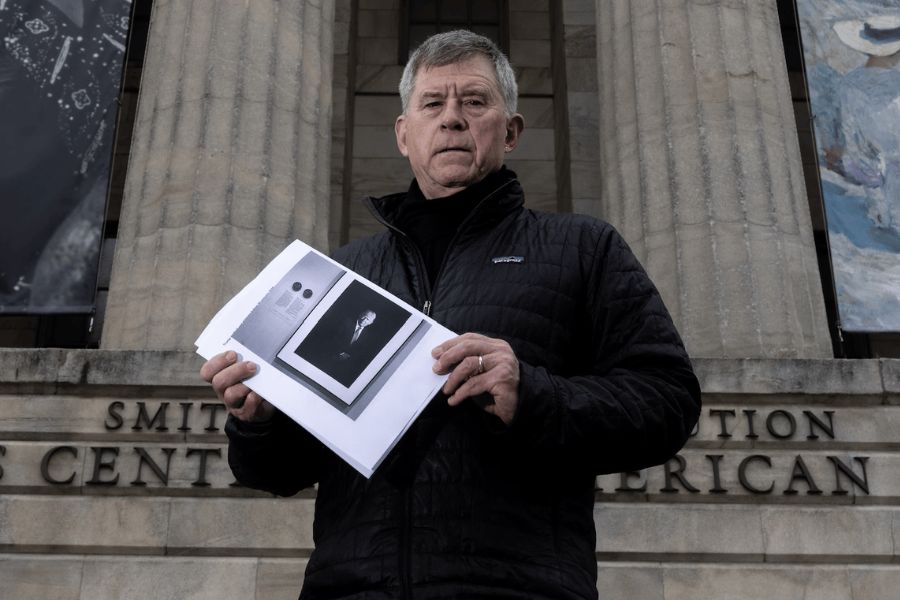
When the Smithsonian National Portrait Gallery changed the image of the current President in January, it also removed the original placard which mentioned Donald Trump’s impeachments and the Jan. 6 insurrection. Local historian James Millward had the sense that this was wrong and he shared with the Washington Post that after feeling that we were all witnessing “history being snipped and clipped and disappeared,” he decided to do something about it. So he went to the museum with a stack of paper in hand and gave any interested museum visitors printouts of the old wall text that stated plainly that Trump was “impeached twice, on charges of abuse of power and incitement of insurrection.” He called it “guerilla teaching.”
This was a personal fight for Millward, as the co-founder of Citizen Historians for the Smithsonian, a group that has made it a mission to spend thousands of hours tracking changes made by the Trump administration to change the way history is preserved and show that people are paying attention. Their group recruited hundreds of volunteers last summer and fall to take more than 50,000 photos of every sign in the Smithsonian museums and National Zoo. A similar effort is happening digitally to save websites, online data sets and other knowledge in danger of being wiped away.
The fight isn’t isolated to DC-based museums either. National Parks around the country are being hit with removal orders to take down signs related to Native Americans and climate change. This is a heroic fight and it’s being waged by normal people who are deciding to show up and do something. As Stanford art history professor Richard Meyer also told the Post, he says, “the worst kind of censorship is the censorship we never know has happened.”