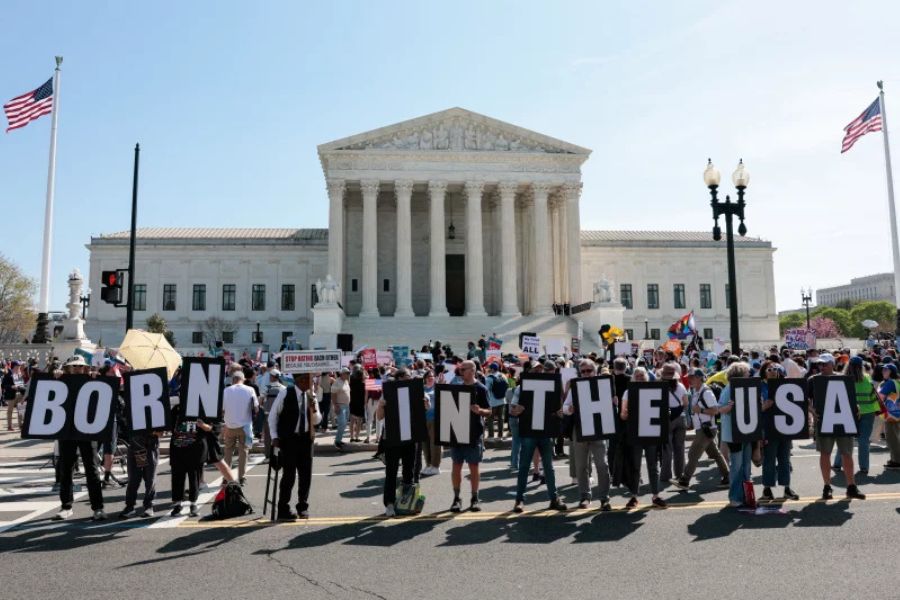
In the headlines this month here in the US are the moves from the current administration to try and remove citizenship rights from Americans who were born in the country but may not meet certain additional criteria such as having parents who were also citizens. It has also become a big deal because of President Trump’s choice to attend the Supreme Court hearing in person. Pew Internet Research has a few pieces released this week that help to add some useful context on this issue. Firstly, there is the point that across the countries of the world, the birthright citizenship model currently used in the US is relatively uncommon.
According to NPR, the proposal appears unlikely to pass and perhaps the best way to understand the difficulties here is to consider some of the thoughtful questions that Supreme Court Justices have been asking about the proposed policy:
- How would you know who the father is, or the mother? What if they’re unmarried? Whose house do they live in?
- How would you adjudicate these cases? You’re not going to know at the time of birth whether they have the intent to stay or not, including U.S. citizens by the way.
- So [are] we bringing pregnant women in for depositions? What are we doing to figure this out?
This is the part I find most interesting about the story. Too often, there seems to be little to no discussion or thought about the realities of HOW things will actually work once rules are made or changed. Case in point – the recent moves by US Department of Energy to reduce safety regulations at nuclear power plants which are highly likely to literally kill power plant workers in the long term .
So when the questions get real and are asked by people other than deeply invested journalists, it’s worth paying attention. We need more people in positions of authority to ask these kinds of questions about proposed policies instead of choosing blind loyalty and quiet obedience.