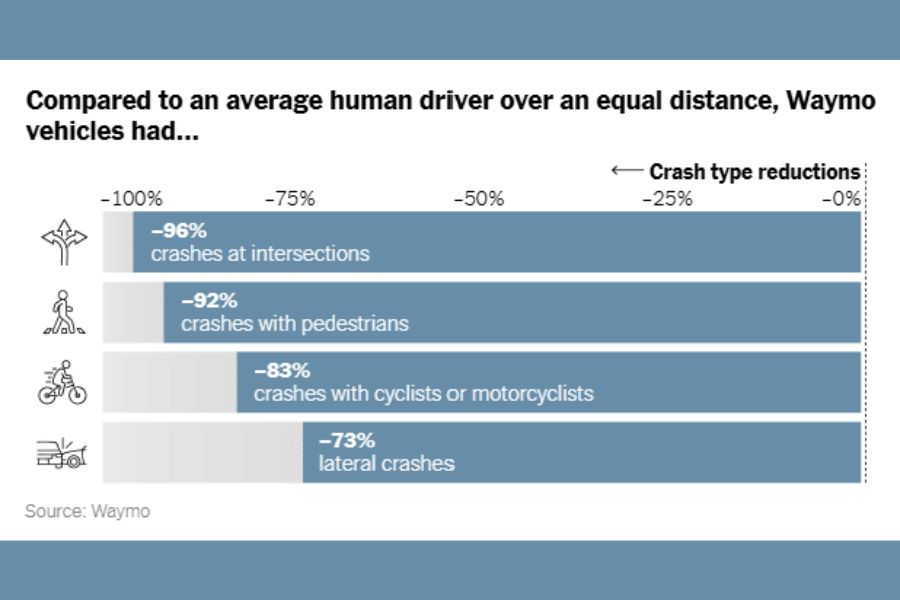
Recently, a compelling article that came out, written by a trauma surgeon who has had to deal with the aftermath of bodies shattered from car crashes. In it, he argues that the data we have so far on driverless cars is clearly in their favor. Crashes in automated vehicles are reduced by over 90%, fatal crashes are rare and the record when considered against miles driven is excellent. Based on the data, the argument for hastening more driverless cars onto the road is clear. What’s missing from this data are the other factors that will impact whether driverless cars do indeed offer the intended benefits.
First is the reality that at least for the next decade and likely beyond, any future that includes significant driverless vehicles will also include vehicles on the road driven by humans. This means the most important data will not compare humans to automation but rather measure the overall safety on the roads when both are ubiquitous. The second, and more concerning, is what freedoms and controls we might all be giving up in a world filled with only driverless vehicles. Aside from the obvious privacy concerns of continually tracked and always-connected cars that monitor our every movement, there is the future dystopian problem of automated cars susceptibility to being hacked by evildoers for kidnapping or worse.
The point here isn’t to refute the data on the safety of automated cars, when taken in isolation or to stop wider innovation. For example, one of the more innovative uses of automation in driving I came across recently was by a company called QTPIE that is using automation for real world driving evaluations. Rather, it seems that the better way to really assess how to accelerate the adoption of automation is by finding better solutions to some of the unasked questions on the potential dangers. Or at least starting to gather some data on those scenarios too.