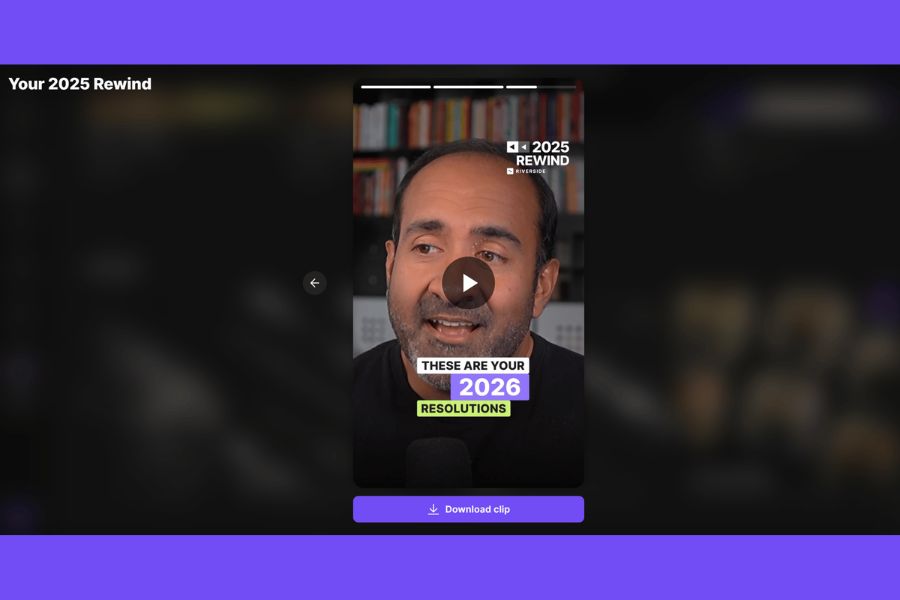
There’s a special kind of uselessness amplified by AI that’s probably surrounding you right now: the year in review. The idea wasn’t a bad one. After users spend all year feeding their content onto a platform, it makes sense for that platform to try and offer back and recap of “greatest hits,” right? Unfortunately, the results sometimes turn out to be a celebratory pile of generative slop without meaning or thoughtfulness.
Here’s an example. Riverside, the platform I use to record my podcast, produced a “year in review” for me that showcased the “top word” used by my guests (who are usually authors): the word was “book.” Then their AI clipped together a bunch of segments of my guests saying some version of “ummm” … and the whole thing came together with the AI’s observation that “you like to make people laugh” because it noticed people laughing in video clips.
When Merriam-Webster named “slop” the word of the year, this is pretty much exactly what they were talking about. There’s a growing temptation to create some sort of performative data roundup because it’s available at the touch of a button or tweak of an algorithm. That doesn’t make it good.
Consider instead how Spotify has been doing their year in review. Every time I get those, I see useful insights about my listening trends along with an unspoken reminder that I need to broaden the musical diversity of my playlists. As a result of those recaps, I do something different. That makes it meaningful.
Although, the Riverside recap did make me more conscious of the times that I have said “umm” during interviews, so I suppose that’s something.